

Outdoor Recreation &
Lifestyle Design
Outdoor space should reflect the way a family truly lives. At Waymark, recreation and lifestyle environments are designed with purpose — spaces for movement, wellness, play, and connection, integrated seamlessly into the broader landscape.

Recreation & Lifestyle Services
Family Play Space Design
Family spaces deserve the same design attention as entertaining spaces. Waymark creates play environments that feel natural, elevated, and seamlessly integrated into the landscape — supporting childhood and family life without disrupting the overall beauty of the home.
Home Sport Courts
Waymark designs sport courts that balance performance with aesthetic integrity. These spaces are crafted to feel intentional within the landscape — not like standalone recreational slabs.
Pet-Friendly Zones
Pets are part of the family, and outdoor environments should welcome them beautifully. Waymark designs pet-conscious zones that balance durability, function, and elegance — ensuring the landscape remains pristine while supporting everyday life with animals.
Yoga Garden Design
A yoga garden is a space for restoration and calm — a personal retreat within the landscape. Waymark designs wellness-focused outdoor zones that feel quiet, grounded, and deeply intentional.

Entertaining Additions for Rest and Play
These features are never treated as isolated add-ons. Whether a sport court, a children’s play space, a yoga retreat, or a pet-friendly zone, every element is designed to feel cohesive, elevated, and architecturally aligned with the home.
Waymark believes that the best outdoor environments support daily life as beautifully as they support entertaining. Recreation becomes part of the landscape’s story — designed with restraint, durability, and timeless form.
The result is outdoor living that is active, personal, and enduring — spaces built for the rhythms of real life beyond four walls.
Featured Project
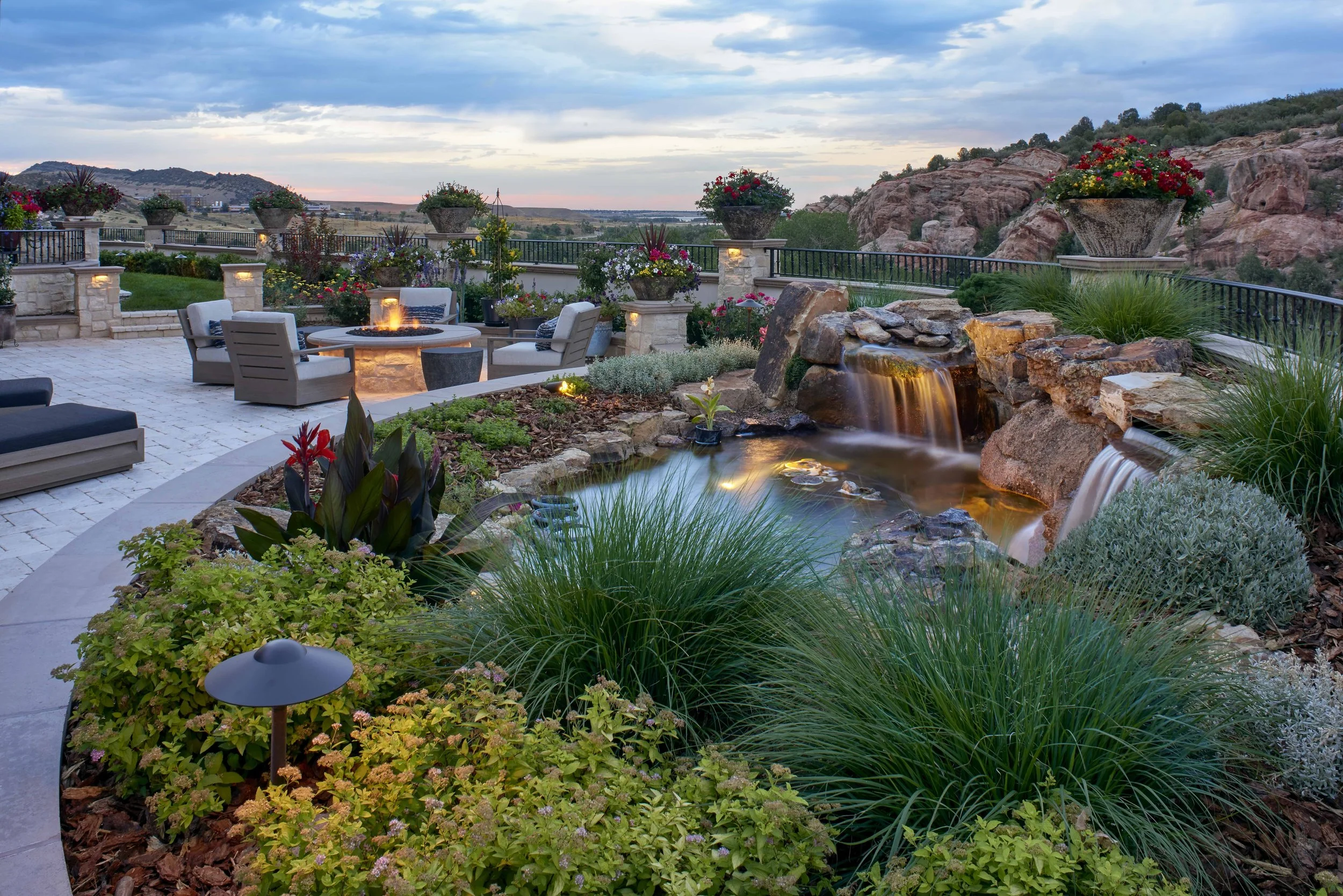
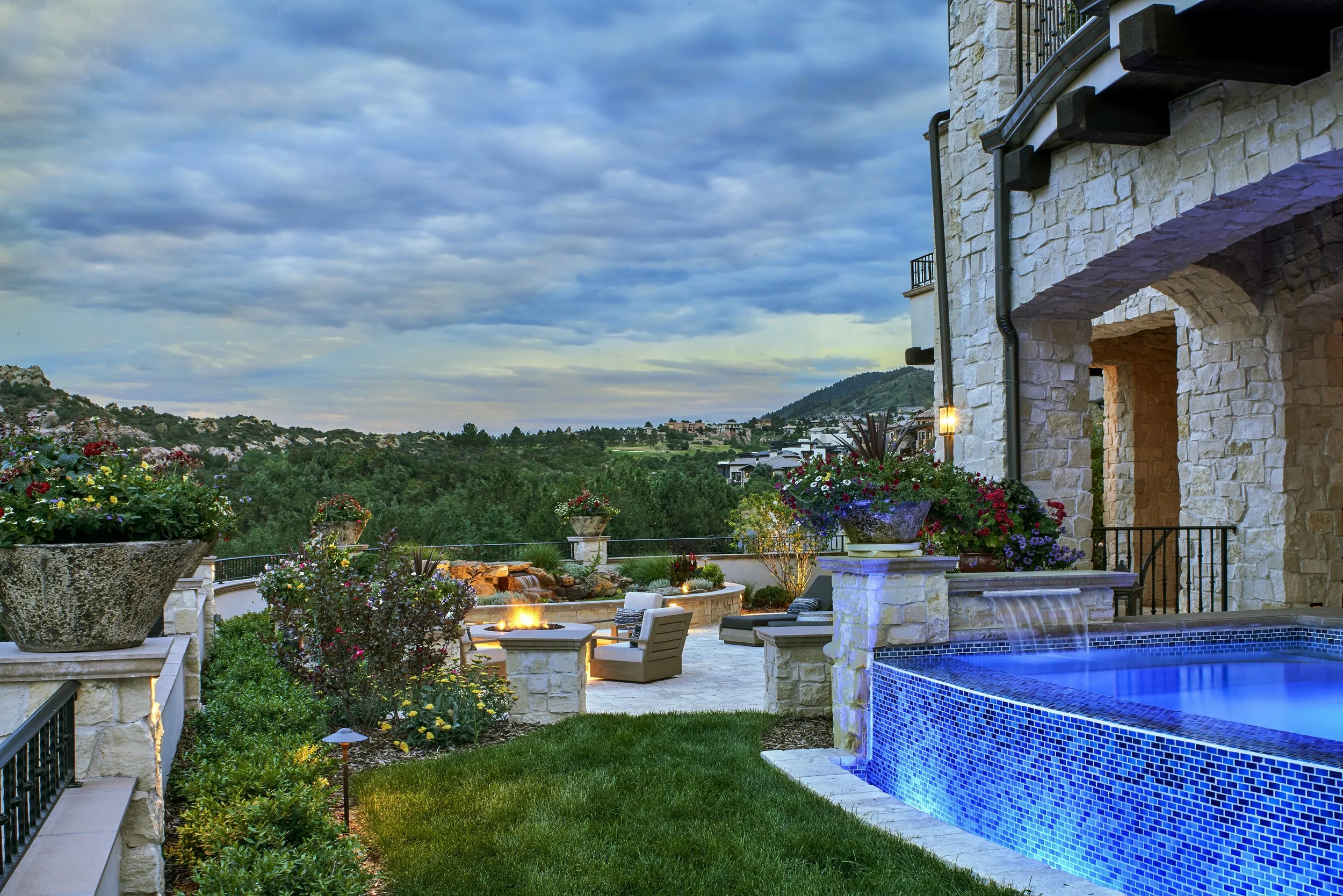
Garden Falls Overlook
Positioned above a sweeping Colorado backdrop, this outdoor environment was designed to feel immersive, elevated, and deeply connected to the surrounding terrain.
“The final result is a true four-season outdoor living space — pool, fire features, kitchen, spa — our kids and their friends never leave.”
— Joseph Sabia
Frequently Asked Questions
-
A regulation pickleball court is 20' x 44', but for a comfortable residential experience you typically want additional run-off space around the perimeter. In practice, many homeowners should plan on a footprint closer to 30' x 60' depending on fencing, circulation, grading, and surrounding uses.
That said, every property is different. Some homes have room for a full dedicated court, while others are better suited for a practice court, half-court concept, or multi-use recreation space. We always begin with the site and how you want to live outdoors—not forcing a feature where it doesn’t belong. -
Synthetic putting greens are dramatically lower maintenance than natural grass. There is no mowing, fertilizing, irrigation balancing, reseeding, or seasonal turf stress to manage.
Natural grass can be beautiful, but maintaining true putting-green quality at a residential level requires significant attention and ongoing cost. For most homeowners, premium synthetic systems offer the better balance of performance, appearance, and practicality.
The goal should be enjoyment—not another demanding chore. -
Absolutely—and they should be.
The best recreation spaces are integrated into the overall property through grading, planting, screening, lighting, materials, and thoughtful placement. A sport court should feel like it belongs to the estate, not like a commercial surface dropped into the backyard.
We believe lifestyle features can be elegant when approached through design rather than utility alone. -
The strongest long-term value usually comes from features that are widely enjoyable, visually refined, and easy to maintain.
That often includes putting greens, sport turf play lawns, pickleball or multi-use courts, fire-centered gathering zones, pools, spas, and flexible entertaining areas. Features with narrow appeal or oversized footprints can be less valuable than multi-functional spaces used regularly by family and guests.
The best investment is usually the feature that gets used often and enhances daily life. -
Yes. We design recreation spaces as part of the larger landscape experience.
That may include bocce courts, putting greens, premium sport turf, play lawns, basketball spaces, pickleball courts, or multi-use surfaces for active families. Our focus is making sure the feature feels purposeful, proportionate, and integrated into the property. -
Yes—when planned correctly.
Colorado offers four distinct seasons, so the smartest recreation spaces are designed for flexibility. Sport turf can extend usability beyond traditional lawn seasons. Courts can be positioned for sun and wind considerations. Lighting can make shorter winter days more usable. Adjacent fire features or lounge areas can keep spaces enjoyable even when temperatures cool.
We think in terms of annual lifestyle value, not just summer use. -
Yes. Many families want play spaces that feel imaginative and beautiful rather than bright plastic and temporary.
Natural playground concepts may include boulders, timber elements, climbing features, mounded terrain, sand zones, swings, water play, pathways, and discovery gardens—all integrated into the broader landscape.
The best children’s spaces invite creativity while still respecting the architecture of the home. -
Noise should be considered early, especially on tighter lots or in established neighborhoods.
We look at placement, orientation, setbacks, fencing types, planting buffers, grade changes, and how sound may travel relative to nearby homes. Sometimes a small shift in location creates a dramatically better outcome.
Great design considers not only how something looks—but how it lives within the neighborhood. -
That depends entirely on the feature mix.
A compact property may support a putting green, turf play zone, and lounge area. Larger lots may accommodate a full court, bocce, pool, spa, and multiple gathering spaces. Many homeowners are surprised by how much can be achieved when space is planned intelligently.
We focus on proportions, circulation, and priorities so every square foot works harder. -
For most recreation environments, we favor materials that perform well in Colorado’s climate and require minimal ongoing upkeep.
That may include premium synthetic turf systems, sport surfacing designed for freeze-thaw conditions, powder-coated steel, durable masonry, composite or aluminum shade structures, and low-maintenance planting palettes around the space.
The right materials should let you spend more time using the space than maintaining it.