

Custom Fire &
Home Lighting
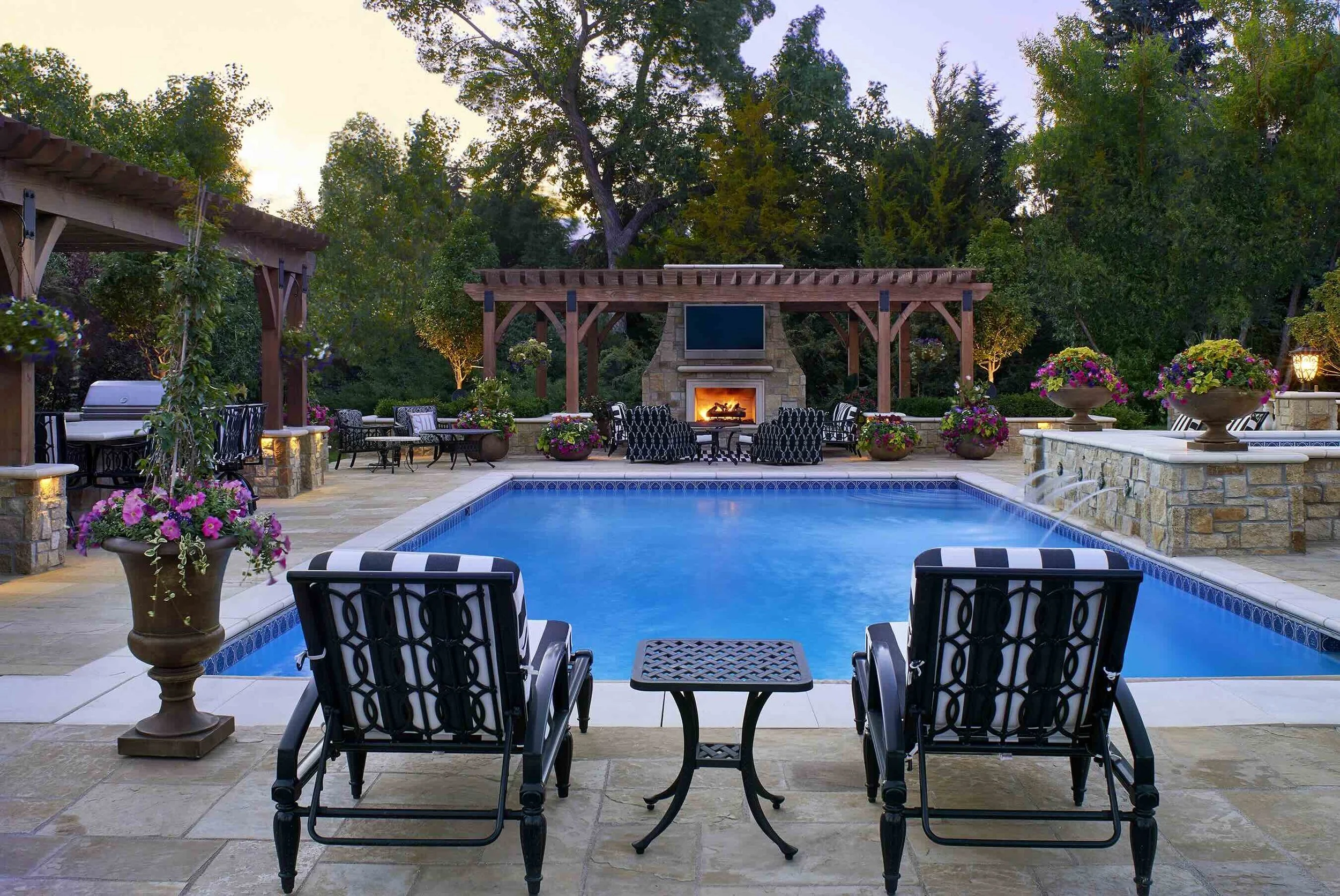
Warmth and illumination transform an outdoor space from seasonal to truly livable. At Waymark, fire and lighting are designed as atmosphere — architectural elements that extend the outdoor experience beyond daylight and into every season.

Home Fire & Lighting Services
Outdoor Fireplaces
Luxury outdoor projects often require significant coordination behind the scenes. Waymark manages the permitting and submittal process end-to-end — ensuring that drawings, documentation, and technical requirements are handled accurately and efficiently.
Fire Pits
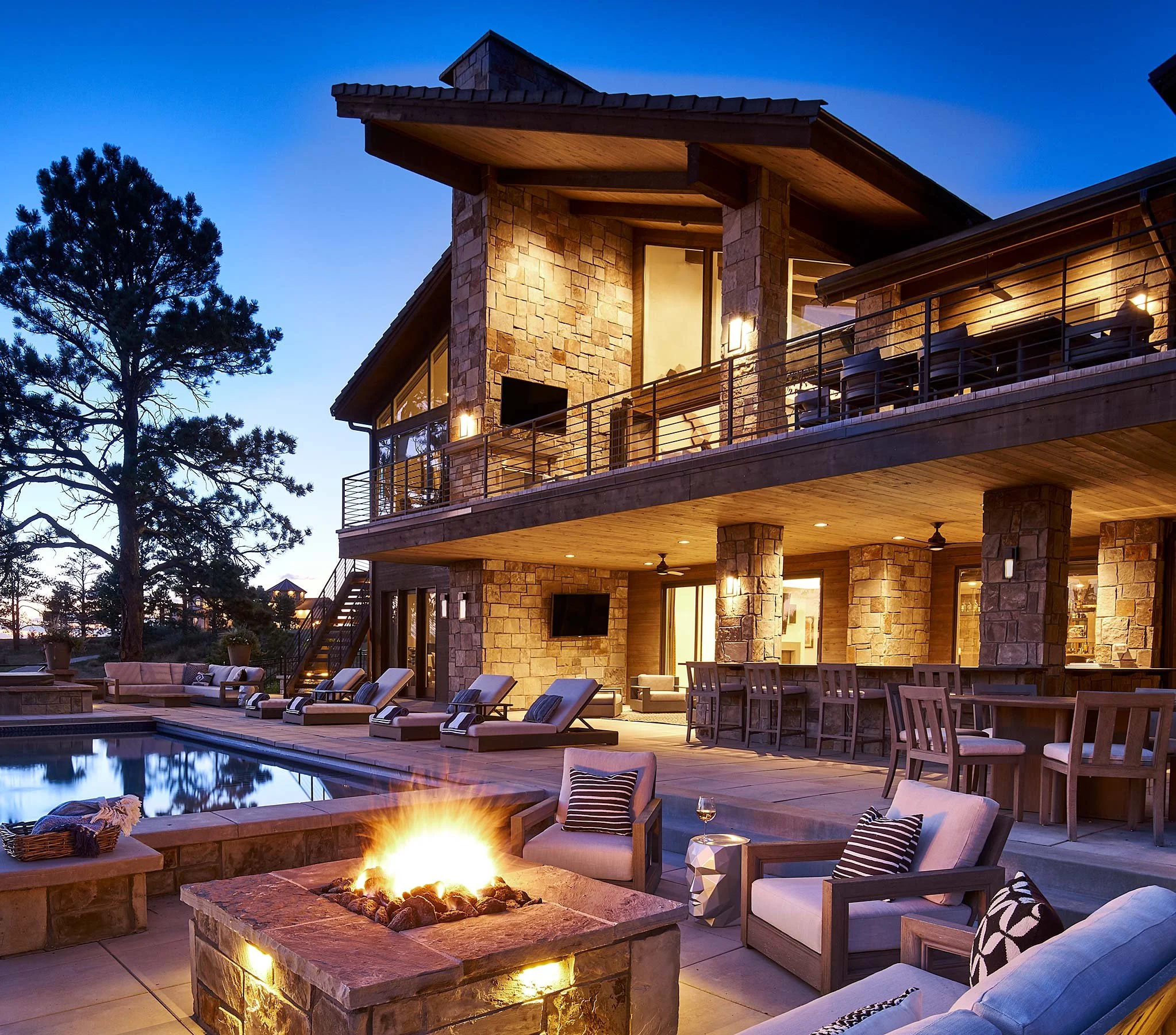
A fire pit creates one of the most natural gathering points in outdoor living. Waymark designs custom fire pits that feel timeless, inviting, and architecturally integrated into the landscape.
Accent & Smart Lighting Systems
Lighting is one of the most powerful elements in outdoor design — often invisible by day, transformative by night. Waymark creates layered lighting systems that enhance safety, mood, and architectural beauty with subtlety and precision.

Welcoming Environments for Every Season
These features are not accessories. They shape how a landscape feels: the comfort of a gathering on a crisp Colorado evening, the quiet glow along a garden path, the way stone and water come alive after sunset. Waymark designs fire and lighting with restraint and intention, ensuring each element enhances mood, beauty, and function without visual excess.
From timeless fire features to layered smart lighting systems, we create outdoor environments that feel welcoming, elevated, and enduring — spaces that live beautifully well into the night.
Featured Project
Pavillion Waterscape
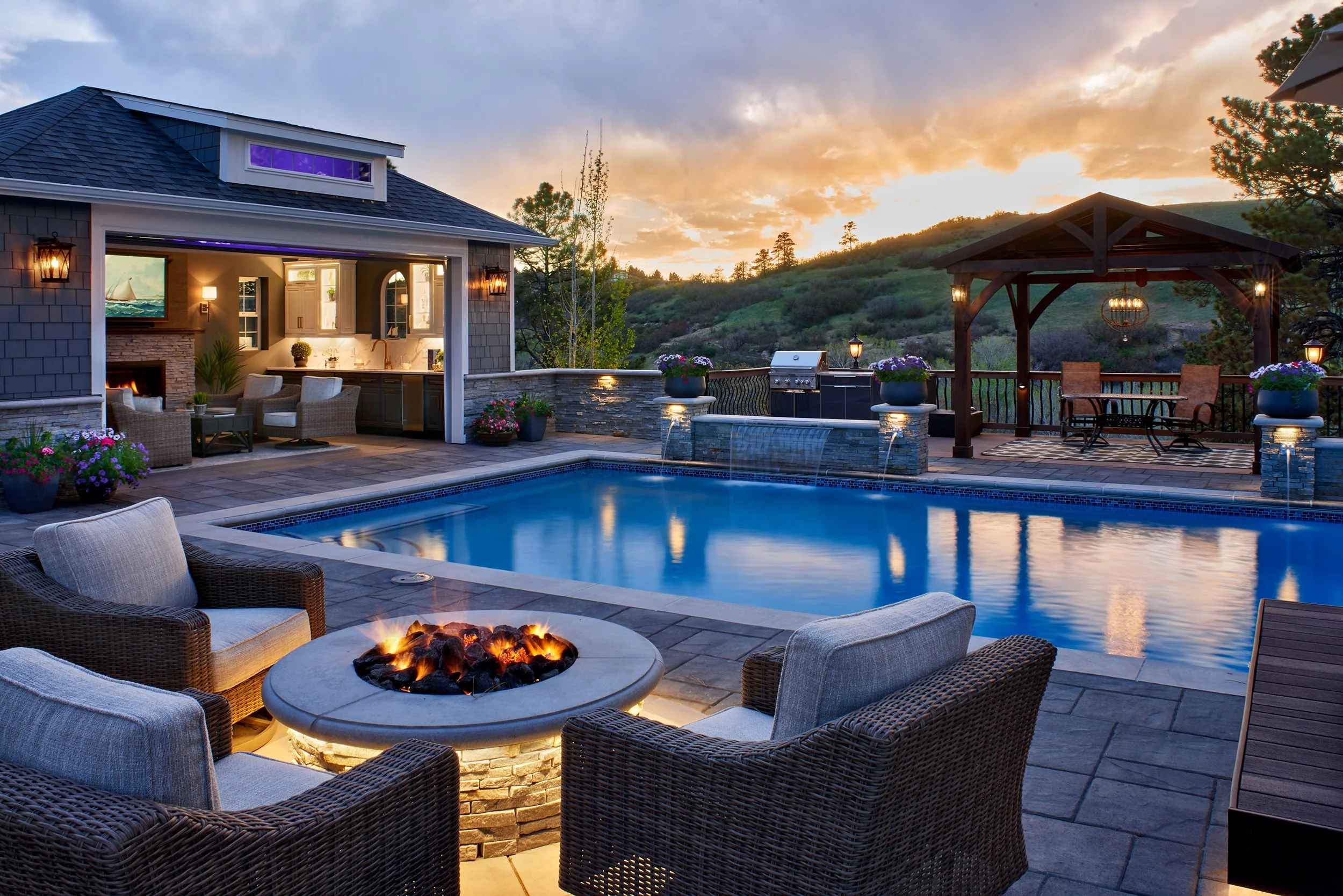
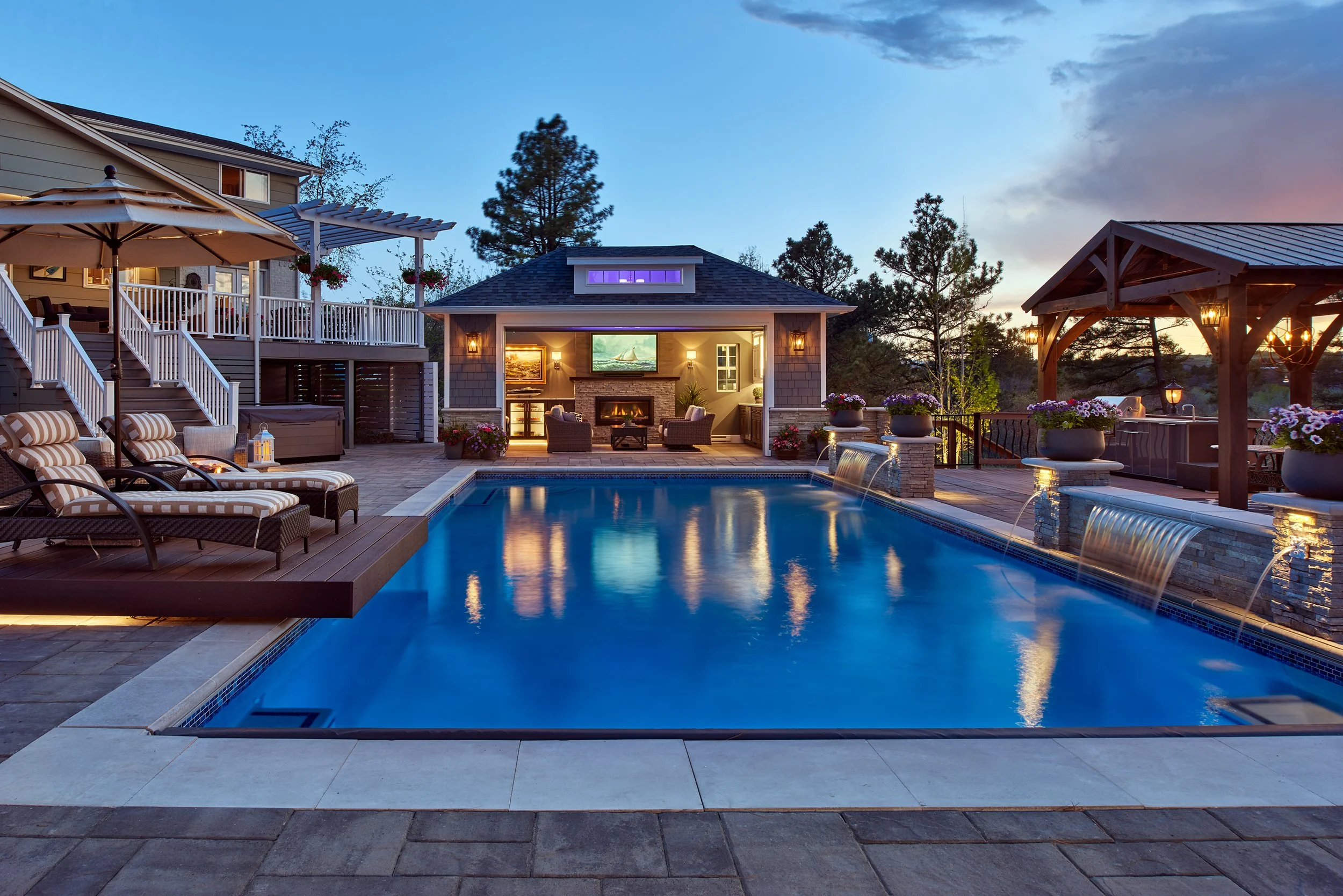
Set against the dramatic backdrop of Colorado’s red rock terrain, this residence called for an outdoor environment that felt timeless, grounded, and deeply connected to its surroundings.
“From the start, it was clear we were speaking the same language. The result was a gorgeous patio with an outdoor grill, fire pit, seating walls, and stunning lighting and sound design. What impressed us most was the follow-through.”
— Bill Clark, Bluffmont (Lone Tree)
Frequently Asked Questions
-
The best outdoor lighting plan does both—but in different ways.
For security, we typically think in terms of visibility, safe arrival, path illumination, entry lighting, and discreet coverage around gates, drives, and side yards. For ambiance, the focus shifts to warmth, depth, and atmosphere: softly lit steps, grazing on stone or planting, gentle tree uplighting, and layered light around dining and lounge areas.
The goal is never to flood the property with brightness. It is to make the landscape feel calm, inviting, and confidently lit. Denver’s residential energy rules also require certain permanently installed exterior lighting systems over 30 watts to have controls that allow automatic shutoff, which fits well with a more thoughtful, layered approach. -
For most residential projects, the primary options are natural gas or wood-burning, though propane may also be used in certain applications.
In the Denver market, gas is often the preferred choice for ease, cleanliness, and consistency. Wood-burning can create a more traditional fireside experience, but it comes with more smoke, cleanup, and regulatory considerations. We help clients choose based on how they actually want to live outdoors—not just what sounds appealing on paper. -
A gas fire pit is typically the easiest to use. It starts quickly, burns cleanly, and works beautifully for regular entertaining.
A wood-burning fire pit offers a more nostalgic experience—the crackle, scent, and ritual of a traditional fire—but it is less convenient and more restricted in many settings.
A custom masonry fireplace creates a stronger architectural presence. It can define an outdoor room, provide more visual enclosure, and feel like a true extension of the home.
The right choice usually comes down to how often you want to use it, how much ambiance you want, and whether the fire feature is meant to be a focal point or simply one layer of the overall outdoor environment. -
The most effective approach is layered lighting.
Rather than relying on one bright fixture, we think about circulation, gathering, dining, architecture, planting, and views. Path lights, step lights, subtle uplighting, low-glare overhead lighting at structures, and illumination around key entertaining areas all work together to make the backyard feel natural and usable after dark.
A well-lit landscape should feel composed in the evening—not overly theatrical and never harsh. -
Absolutely. In many of the most compelling outdoor environments, fire and water are designed together from the beginning.
That may mean a fire feature near a spa lounge area, a fireplace anchoring a poolside seating zone, or a more sculptural focal point that balances the visual coolness of water with warmth and light. The key is making sure it feels integrated into the composition of the property rather than added later as a separate idea. -
Yes—especially if they are wood-burning or otherwise considered open burning.
Denver’s fire safety guidance says permits for open burning are rarely issued to individuals and never issued for chimineas, and notes that portable fire pits, chimineas, and open fires are tightly regulated. Denver also publishes a policy for residential exterior heat-producing devices that defines open burning broadly and governs where and how these devices may be used. Because rules and enforcement can depend on the exact type of feature, fuel source, and site conditions, we guide clients toward solutions that are both beautiful and realistic for the jurisdiction. -
Low-voltage lighting is relatively low-maintenance, but it is not maintenance-free.
Fixtures should be checked periodically for lens cleaning, repositioning, wire issues, transformer performance, and plant growth that may block intended light effects. LED fixtures generally offer long service life, but actual longevity depends on fixture quality, installation quality, and environmental exposure.
In practice, the best systems are the ones designed to age gracefully and be easy to service over time. -
Yes. Many outdoor lighting systems can be automated by timer, photocell, astronomical scheduling, or integrated into broader smart home controls.
That means lights can come on at dusk, shift by season, operate on set schedules, or be adjusted remotely. Denver’s residential energy rules specifically contemplate exterior lighting controls with automatic shutoff capability for certain permanently installed lighting loads, so smart scheduling is both practical and aligned with current code expectations. -
We think about them early.
Fire and lighting should not be treated as accessories selected at the end of a project. They should be part of the initial design conversation—how the property is approached, how people gather, where evening views matter, what moments should feel intimate, and how materials and architecture are expressed after dark.
When they are integrated properly, they do not draw attention to themselves. They simply make the entire outdoor environment feel complete. -
Natural gas is cleaner, simpler, and easier to use. There is no wood to store, no ash to clean up, and no waiting for the fire to catch. It is usually the better fit for clients who want elegance and convenience.
Wood-burning offers a more traditional sensory experience, but it requires more maintenance and may face more restrictions in Denver due to open-burning rules. For many of our projects, gas ends up being the more refined and reliable solution. -
Often, yes. In Denver, gas work commonly falls under trade permitting, and the city’s permit system includes trade-specific quick permits for certain eligible work. The exact path depends on the scope of the installation, the municipality, and whether additional building or fire review is required. We coordinate that process with the appropriate professionals so it is handled properly from the start.
-
In many cases, yes.
Permitting and clearance requirements can depend on the type of feature, fuel source, distance to structures, overhead conditions, and the municipality. Denver’s fire and building rules address residential exterior heat-producing devices and open-burning conditions, and city permitting resources outline when homeowner or contractor permit pathways apply. In other words, this is not something to improvise in the field. We address it upfront so the feature is safe, compliant, and worthy of the property.
If you want, I can do the next batch in this same voice and tighten them even further into shorter website-ready versions.